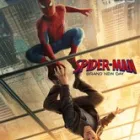







Spider-Man: Brand New Day arrives with the sort of title that feels like a promise and a threat at once. A fresh start sounds liberating, but for Peter Parker, “fresh” is never simple. It usually means new grief, new responsibility, and a new way of being tested by a city that keeps demanding more heroism than any one person should have to give. What makes this imagined chapter so intriguing is not just that it wants to reset the board; it wants to ask whether Peter can ever truly live like a pe...
Spider-Man: Brand New Day Review and Streaming Guide
Spider-Man: Brand New Day arrives with the sort of title that feels like a promise and a threat at once. A fresh start sounds liberating, but for Peter Parker, “fresh” is never simple. It usually means new grief, new responsibility, and a new way of being tested by a city that keeps demanding more heroism than any one person should have to give. What makes this imagined chapter so intriguing is not just that it wants to reset the board; it wants to ask whether Peter can ever truly live like a person again after spending so much of his life as a symbol. That question gives the film its emotional engine, and it is the reason this movie, even in concept, feels less like another superhero episode and more like a reckoning.
As a film enthusiast, I tend to look for two things in a Spider-Man story: a clear moral line and a sense of human scale. Brand New Day appears to understand both instincts. Instead of drowning itself in cosmic spectacle, it leans toward the intimate pressure cooker that has always made the best Spider-Man stories work. That does not mean it is small. It means the stakes are personal in the way that matters most. Peter’s problems are not just about saving Manhattan; they are about rent, identity, isolation, trust, and the exhausting burden of always being the person who shows up. The city may still be noisy, dangerous, and visually spectacular, but the film seems determined to make Peter’s inner life the true battleground.
The title itself invites one of the film’s smartest possible moves: the idea of reinvention. Brand New Day suggests that the old continuity scars are not necessarily erased, but repurposed. That is an important distinction. The most durable superhero films do not pretend that history never happened; they reorganize history into emotional momentum. If this entry works, it will not because it tries to outdo every previous Spider-Man adventure in scale, but because it finds a new dramatic angle for a character audiences know intimately. In the hands of a thoughtful filmmaker, the “brand new day” is not a marketing reset. It is a narrative dare.
What also stands out is how naturally the Spider-Man franchise has evolved into one of the few blockbuster spaces where vulnerability is not a weakness in the storytelling. Peter Parker has always been a character defined by inconvenience. He is brilliant, yes, but brilliance does not protect him from pain, and heroism does not solve his loneliness. That tension, when handled well, gives Spider-Man stories a rare texture: they can swing from exhilarating to devastating within minutes without feeling dishonest. Brand New Day, by name and likely by design, seems ready to explore that duality. It wants the spectacle, but it also wants the ache underneath the mask.
Visually, one hopes the film embraces the urban poetry that separates Spider-Man from so many other comic-book properties. A great Spider-Man movie does not merely depict New York; it choreographs with it. Rooftops, alleyways, glass facades, subway tunnels, crosswalks, and winter streets all become part of the character’s movement vocabulary. If the camera understands the geography of the city, then every swing becomes a sentence. When a Spider-Man movie gets this right, action is not just action; it is rhythm. It is punctuation. It is a conversation between body and skyline. Brand New Day has the chance to be especially strong here if it remembers that the most memorable sequences in this franchise are often the ones where the city feels alive enough to answer Peter back.
Still, no amount of style can rescue a film that does not know what Peter is emotionally carrying. The strongest Spider-Man stories are never content with generic villainy or mechanical escalation. They need adversaries that reflect the hero’s own fractures. Even when the conflict looks external, it should echo inward. That is why the best Spider-Man films feel like coming-of-age dramas disguised as blockbusters. In that sense, Brand New Day has a powerful thematic opportunity: it can explore what it means to rebuild a life after public collapse, after memory loss, after fractured relationships, after the humiliations of being reduced to a headline instead of a human being. That is fertile dramatic ground, and it is also where this series can become more moving than most action franchises dare to be.
The tone, if the film commits to it, should balance wit and melancholy. Spider-Man has always relied on humor, but the jokes work best when they feel like a defense mechanism rather than a personality trait handed down by committee. Peter’s sarcasm is funny because it is often the last barrier between him and overwhelm. In a movie like Brand New Day, the humor should therefore feel lived-in, not ornamental. It should crack from pressure. That kind of writing gives the character dimension, and it allows the film to switch gears into sincere emotion without sounding manipulative. When Spider-Man lands emotionally, it is because the comedy and the sadness belong to the same person at the same time.
The supporting cast will matter enormously here, not simply as side characters, but as mirrors of what Peter is losing or trying to preserve. A Spider-Man film is rarely at its best when it treats everyone else as a placeholder between action scenes. The franchise thrives when relationships create real friction: friends who do not know enough, allies who know too much, authority figures who misunderstand the stakes, and strangers whose brief encounters leave lasting moral residue. If Brand New Day is going to justify its title, it needs to build a world around Peter that feels unstable in all the right ways. New beginnings are most compelling when they come with the possibility of disappointment.
There is also a larger cultural reason Spider-Man endures. Unlike many superheroes, Peter Parker is not fantasy fulfillment in the simple sense. He is aspiration mixed with anxiety. We watch him because he is strong, but we stay because he is fragile. That combination gives every new film a strange burden: it must deliver enough scale for modern blockbuster expectations while preserving the modest emotional truth that made the character resonate long before giant crossover events became the norm. Brand New Day sounds like a film aware of that pressure. The title feels almost ceremonial, as if the franchise is stepping into a new chapter while still bowing to the emotional history that made this character matter in the first place.
If the screenplay is disciplined, the film could become one of the more memorable entries in the modern superhero cycle precisely because it refuses to over-explain itself. Audiences do not need another origin story. They need a reason to care about Peter now. They need a story that treats his pain as narrative fuel rather than franchise homework. They need action sequences that do more than decorate the runtime. They need a sense that each scene changes the balance of Peter’s life. In that regard, Brand New Day has the opportunity to feel refreshingly adult without becoming bleak, and entertaining without becoming disposable.
One of the appealing aspects of a title like this is its optimism. For all of Peter Parker’s suffering, Spider-Man stories always preserve a stubborn faith in renewal. Not the naïve kind, but the hard-earned kind. The kind that says people can be hurt, embarrassed, isolated, and still choose decency. That is the moral heartbeat of the character, and it is why even the darkest Spider-Man stories tend to end with a spark, not a surrender. If Brand New Day honors that tradition, it may give audiences more than a summer spectacle. It may offer a reminder that starting over is not about forgetting what happened. It is about deciding to keep going anyway.
In the end, Spider-Man: Brand New Day has the ingredients for a film that feels both familiar and newly charged: a beloved hero, a fractured identity, a lived-in city, and the eternal conflict between private pain and public duty. What will determine its success is not simply how high Peter swings or how hard the action lands, but whether the film understands that every great Spider-Man story is secretly about the tender, difficult work of staying human. If it does, then this could be one of those rare superhero films that plays just as well as a pulse-quickening adventure and a character study with real emotional weight.
How to watch Spider-Man: Brand New Day online
Availability & Access: Spider-Man: Brand New Day may stream online after its theatrical run, but current availability will depend on distribution deals. In many cases, viewers can watch or download it legally through subscription or digital rental services rather than free access. If it becomes available on a free tier, that will usually be temporary and platform-specific, while most viewers will need a paid option on major platforms.
Age Rating (US-based): PG-13. Spider-Man films are typically aimed at teens and general audiences, with action, danger, and some intense moments that may not be suitable for younger children without guidance.
Netflix: Availability can vary by region and licensing window. If it arrives on Netflix, it would likely be available to stream as part of a subscription, with download support in the app for offline viewing on supported devices.
Amazon Prime Video: Usually offers rent or purchase options first when a new title becomes available digitally. Prime members may be able to stream later if included in the catalog, and offline access is commonly available through the app after purchase or eligible rental.
Apple TV: Typically provides high-quality rent or purchase options, often with 4K support when available. Downloads are usually supported through the Apple TV app, making it a practical option for offline viewing.
Peacock: If included, it may appear under a premium subscription rather than free access. Download options are generally limited to paid tiers and supported devices, so check plan details before trying to stream.
Hulu: Hulu availability depends on rights agreements and bundle arrangements. If the movie lands there, it will likely be part of a subscription plan rather than free access, with download features restricted to eligible mobile plans and devices.
YouTube (Movies): Commonly offers rent or buy access once a film is released digitally. Viewing is straightforward online, and the YouTube app may support downloads for offline use on supported subscriptions and devices.
- Strong emotional focus on Peter Parker’s personal struggle and resilience
- A fresh-start premise that feels meaningful rather than purely cosmetic
- Well-suited to the character’s classic blend of humor, vulnerability, and responsibility
- Potential for intimate, city-based action that makes New York feel like part of the story
- Opportunity to explore themes of identity, isolation, and rebuilding a life after loss
- Supports a coming-of-age tone that can make the film feel more grounded and human
- Can balance blockbuster spectacle with real emotional stakes if handled well
- A reset-style story can feel familiar if it does not add enough new ideas
- The film may depend heavily on tone, making it vulnerable to uneven execution
- Too much focus on setup could leave less room for fully developed side characters
- If the stakes are kept too small, some viewers may find the scope underwhelming
- It risks leaning on franchise continuity without delivering enough narrative payoff
- The success of the film depends heavily on how well it balances humor and melancholy